
Read time 04-07 minutes
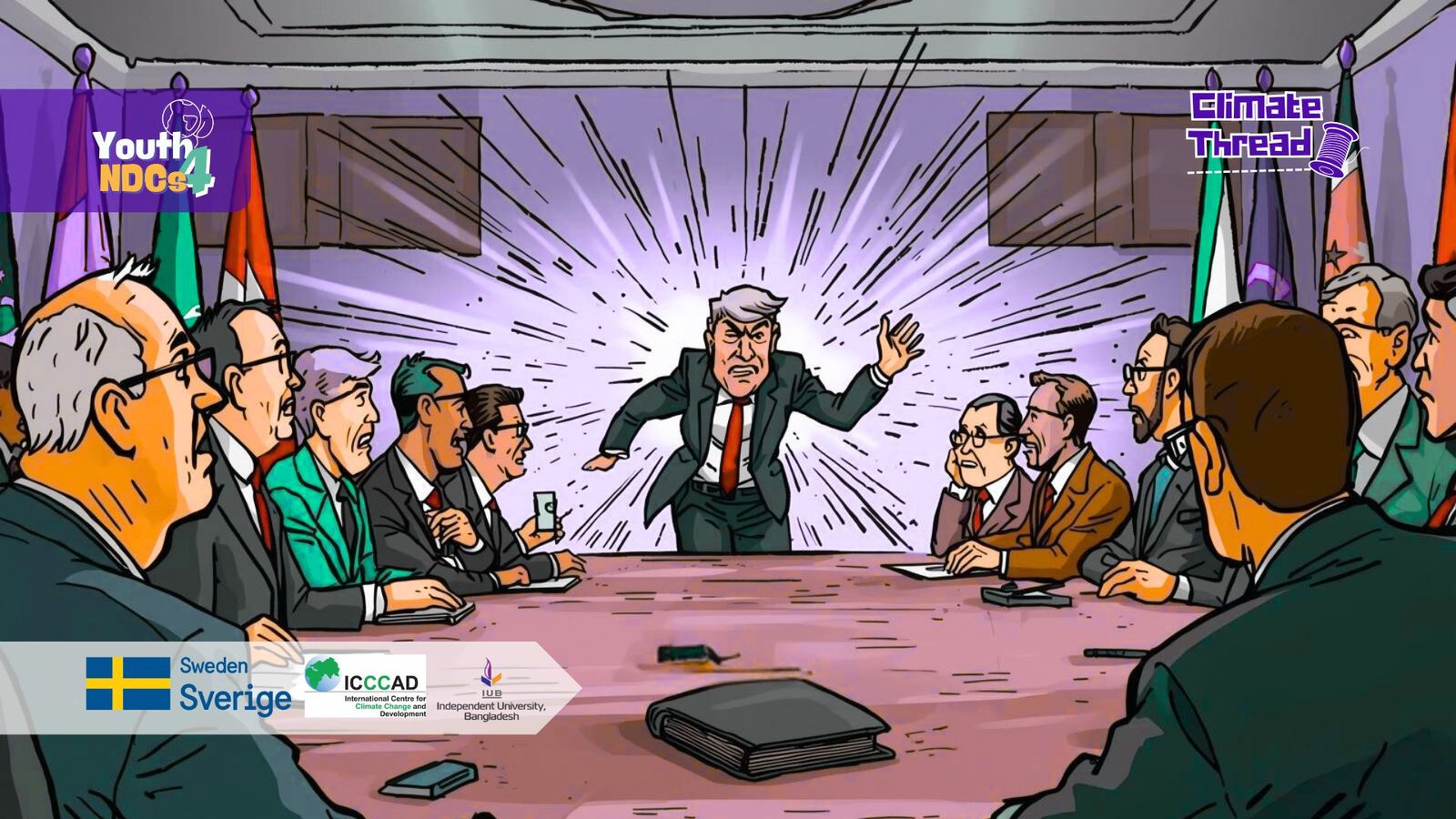
In recent times, the United States has been packing its bags and walking away from the international tables. Since withdrawing from the Paris climate accords to pulling out of dozens of United Nations agencies, the Washington message has been fairly consistent: multilateral organizations are costly, ineffective, and a threat to US sovereignty. The recent action by the Trump administration to exit or defund over 60 international organizations, such as the UN Framework Convention on Climate Change (UNFCCC), is just the latest chapter in this story.
Supporters call this efficiency or putting America First. Critics describe it as abandoning collective responsibility. In any case, once the most influential nation in the world loses interest in international organizations, repercussions do not end at US borders.
Let’s be honest, international organizations can be slow, bureaucratic, and frustrating. Anyone who has followed UN climate negotiations knows they involve a lot of speeches, long documents, and painfully slow consensus-building.
But there is a reason why that “talk” takes place.
These institutions are where the countries negotiate in climate financing, reach an agreement on the emission targets, and determine how the money is passed between the rich countries and the poorer and climate-prone countries. The UNFCCC, for example, is the backbone of the Paris Agreement, COP meetings, and global climate funds. Without it, there can be no common rulebook, and there can be no accountability.
When the US leaves a meeting, it is not only withdrawing, it is undermining the framework of global climate action. Climate financing is particularly sensitive to political indications. Climate projects require long-term planning (in some cases, decades), whereas emergency aid does not. The withdrawal, even temporarily, of a large donor such as the US, is a cause of uncertainty.
The manifestation of that uncertainty appears in very concrete forms:
- Funding for climate is insufficient.
- Projects are put on stands or reduced.
- Third-world nations lose hope of any promise to be fulfilled.
The US also plays a significant role. When it commits, others are more likely to step up. When it leaves, ambition drops across the board. Climate finance does not merely shrink but gets disaggregated, more political, and conditional.
Among the notable aspects of the current withdrawals is the fact that most of the affected UN offices are relatively small and cheap. It does not go to waste by cutting them down, in the overall context of US expenditure.
What it does accomplish is to send a message. What it says is that the global issues, be it climate change, migration, or humanitarian crisis, have ceased to be a collective responsibility. Such a message undermines trust, and trust is the currency that climate cooperation operates on.
In the case of Bangladesh, it is not a theoretical argument about sovereignty or world governance. It’s about survival. Bangladesh is one of those countries that contributed least to climate change, but has been the most vulnerable to its effects, including cyclones, floods, intrusion of salinity, and the increase in sea levels, in which Bangladesh bears the brunt. These realities cannot be adjusted by simply receiving a single international assistance at the time of disaster.
When the US steps back from climate institutions, climate finance becomes less predictable. Grants are replaced by loans. Adaptation and loss-and-damage funding is taken to the periphery. It translates to more burden on national budgets, tougher decisions among policymakers, and more risks to communities that are already on the verge of climate change.
Can others fill the gap? Some argue that the world can just go without the US, simply Europe, or China, or private finance will come in. Partly, that is already occurring. However, there is no single country that can completely substitute the US in terms of its financial burden and political power. In the case of private finance, they will prefer profit-oriented mitigation initiatives, rather than adaptation in vulnerable countries. In such destinations as Bangladesh, that’s an issue, since resiliency does not necessarily bear swift fruits.
Walking away has a cost. The climate crisis in the world is not time-sensitive to political changes and discussions about diverse ideologies. It requires collaboration, concession, and long-term commitments. The withdrawal option might act as a means of restoring order to the US, but the thing is that climate change does not have national frontiers. Leaving the international organizations will not change the problem; it will only weaken the response as well, making it skewed and more unjust. In the case of such countries as Bangladesh, no stakes could be higher. When big powers step back, vulnerable countries are left to face a global crisis with fewer tools and less support. And in a warming world, that’s a risk none of us can afford.
Raziya Nasrin
Student
Department of Environmental Science
Bangladesh University of Professionals (BUP)